Bitcoin Lags as Global Equities Climb to Record Highs
Crypto markets failed to track a global equity rally, raising questions about Bitcoin's role as a risk-on asset.
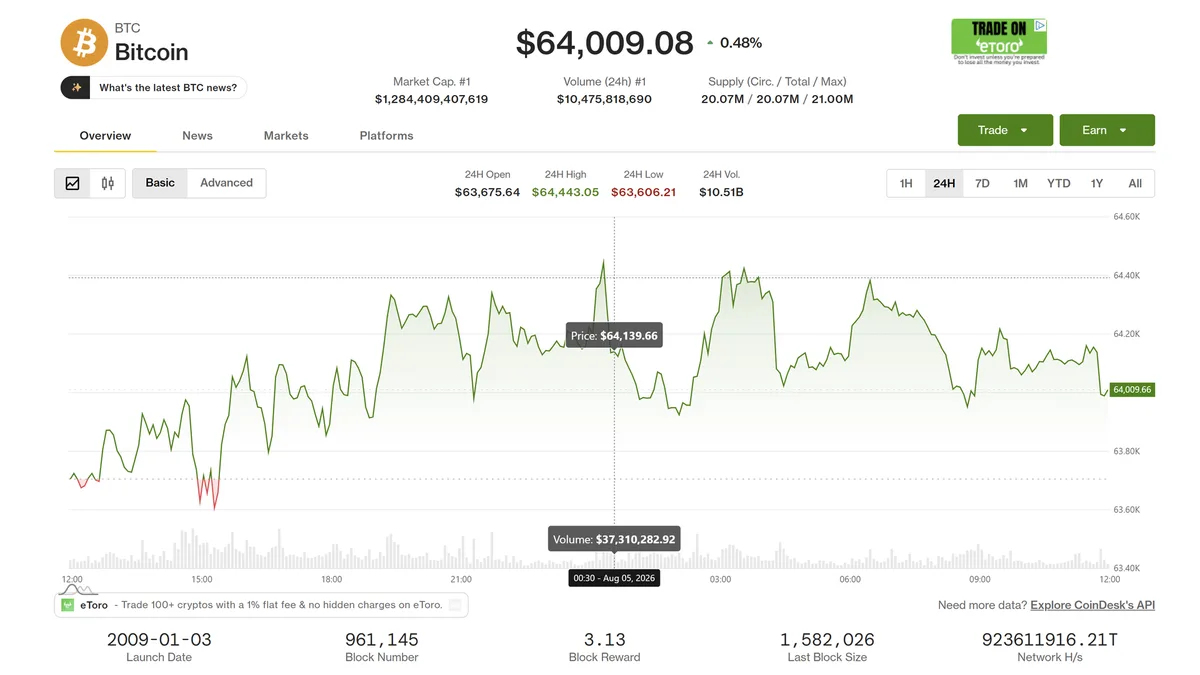
Global equity markets reached record highs in a broad-based rally, but Bitcoin and the wider cryptocurrency market notably failed to keep pace — a divergence that challenges the prevailing narrative of crypto as a high-beta, risk-on asset class. Historically, Bitcoin has tended to surge alongside equities during periods of investor optimism, making its recent underperformance a signal worth watching closely.
The decoupling raises important questions about what is actually driving crypto valuations at this moment. When equities rally without crypto following suit, it typically suggests that sector-specific headwinds — regulatory uncertainty, liquidity constraints, or waning retail enthusiasm — are weighing more heavily than the broader macro tailwinds lifting stocks. Investors appear to be rotating into traditional risk assets without extending that appetite into digital currencies.
Read more Galaxy Digital Posts $85M Net Loss as Crypto Markets Slump in Q2 →
For analysts who track cross-asset correlations, this kind of lag can mean one of two things: either crypto is experiencing a temporary pause before catching up to equities, or it is entering a more prolonged consolidation phase in which its correlation to traditional markets weakens. Neither outcome is inherently bearish, but both demand more nuanced positioning from portfolio managers who have used Bitcoin as a macro hedge or a growth proxy.
The broader crypto market mirroring Bitcoin's underperformance suggests this is not an idiosyncratic story about any single token or protocol, but a sector-wide dynamic. That makes macroeconomic and sentiment-based explanations more compelling than any single catalyst. As global equities continue to set records, the pressure on crypto to either justify its valuation thesis or recalibrate investor expectations will only intensify.
Continue reading at CoinDesk.