Bond Traders Prepare for Volatility Across the US Yield Curve
Fixed-income markets are on edge as traders hedge against wild swings at both the short and long ends of the Treasury yield curve.
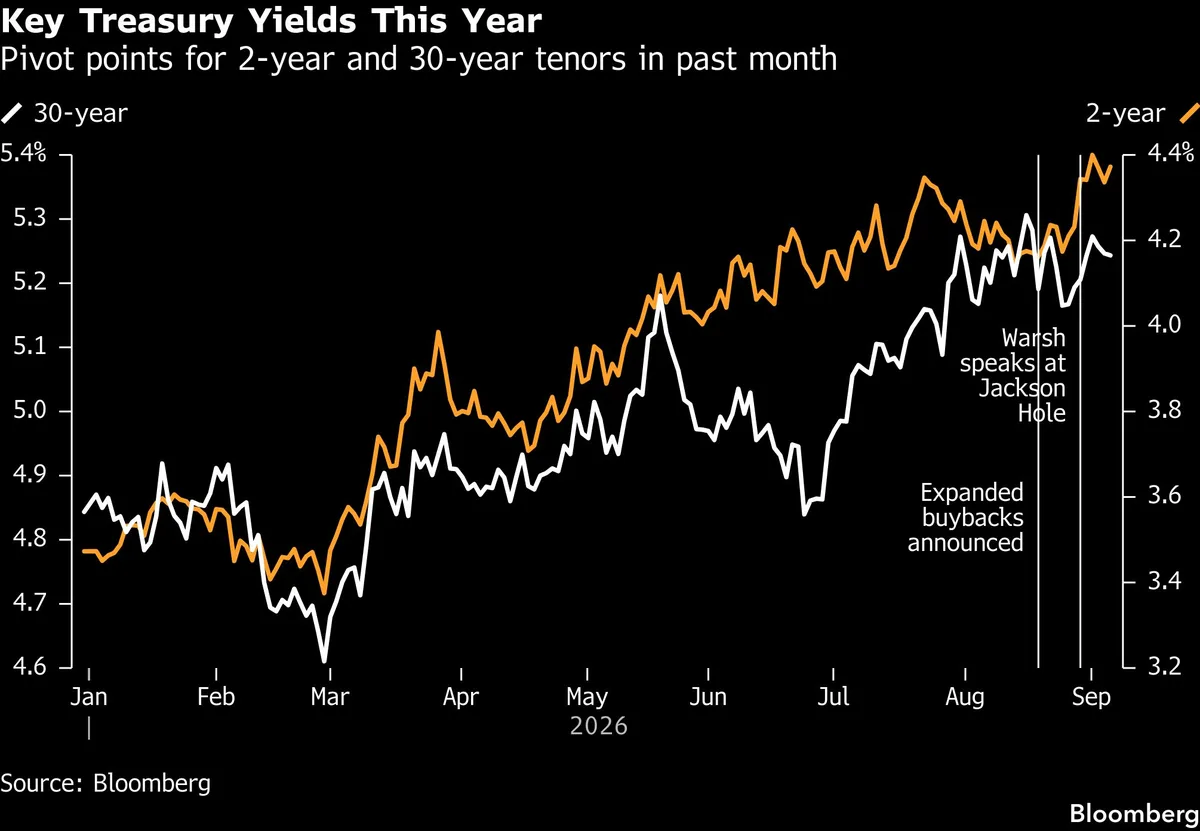
The US bond market is entering a period of heightened uncertainty, with professional traders positioning themselves defensively against potential swings at both the short and long ends of the Treasury yield curve. This dual-sided bracing reflects a market that cannot easily agree on where interest rates are headed — a signal that fundamental tensions between inflation expectations, Federal Reserve policy, and fiscal concerns remain unresolved.
At the short end of the curve, yields are heavily influenced by where traders expect the Federal Reserve to set its benchmark rate over the coming months. Any shift in the Fed's tone — whether toward earlier cuts or a prolonged hold — can rapidly reprice two-year Treasuries, which have been among the most volatile instruments in recent cycles. Traders hedging that end of the curve are essentially placing bets on central bank behavior, a notoriously difficult game when policymakers themselves are data-dependent.
Read more Workday's AI Strategy Calms Investors, but Guidance Signals Caution →
The long end tells a different story. Thirty-year yields reflect longer-horizon concerns: the trajectory of US government debt, structural inflation, and global demand for dollar-denominated safe assets. When foreign buyers step back or domestic deficits widen, long-duration bonds can sell off sharply even as short-term rates hold steady — producing the kind of curve steepening that has periodically rattled equity markets and credit spreads alike.
What makes the current moment analytically interesting is that both ends face pressure simultaneously. That dual vulnerability suggests traders are not simply rotating risk from one part of the curve to another — they are pricing in the possibility that the entire rate structure remains unsettled. In practical terms, this raises the cost of hedging for banks, mortgage lenders, and any institution that relies on stable rate expectations to price long-term obligations.
For everyday investors, persistent yield-curve volatility is a reminder that the post-pandemic rate environment has not yet found a durable equilibrium. Portfolio duration decisions carry more consequence than they did in the low-rate era, and the bond market's unease tends to ripple outward into credit and equity valuations over time. Continue reading at Yahoo Finance.