Fed's Kashkari Shifts to One Rate Hike in 2025 Outlook
Minneapolis Fed President Neel Kashkari now projects a single rate hike this year, citing Iran deal uncertainty and AI-driven investment pressures.
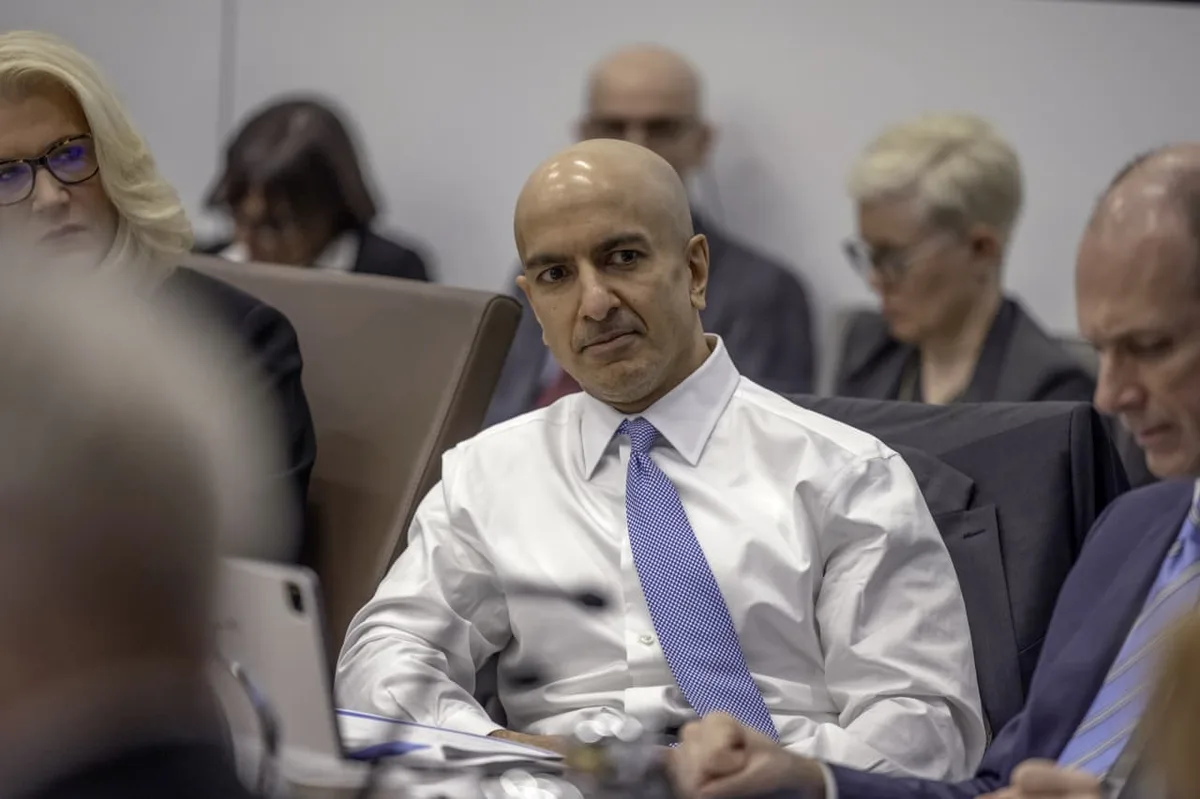
Minneapolis Federal Reserve President Neel Kashkari has revised his interest-rate outlook, now projecting one rate hike in 2025 — a meaningful shift from the more dovish posture that has broadly characterized Fed communication in recent months. His reasoning centers on two forces that have introduced fresh inflationary risk into an already complex monetary policy calculus.
First, Kashkari flagged lingering doubts about the durability of a U.S.-Iran peace agreement. Geopolitical uncertainty of this kind typically feeds through to energy markets, and any sustained disruption to oil supply chains could reignite price pressures that the Fed has spent years trying to tame. For policymakers who set rates based on forward-looking risk scenarios rather than just current data, that uncertainty alone is enough to tilt the needle.
Read more US Goods Trade Deficit Hits Largest Gap in Over a Year →
Second, the rapid buildout of artificial intelligence infrastructure is emerging as a potential demand-side driver of inflation. Massive capital expenditures across the tech sector — from data centers to semiconductor supply chains — can tighten labor markets and push up input costs in ways that are difficult to model with traditional economic tools. Kashkari appears to be among the first senior Fed officials to explicitly cite AI investment momentum as a factor in rate-path thinking.
The significance of this shift should not be understated. Kashkari has historically occupied a more hawkish corner of the Federal Open Market Committee, but his return to a hike-leaning posture after a period of relative restraint signals that at least one regional president sees the current equilibrium as fragile. Markets and Fed watchers will be parsing whether his view finds broader support among FOMC members in the months ahead, particularly as inflation data continues to come in above the 2% target.
Continue reading at MarketWatch.com