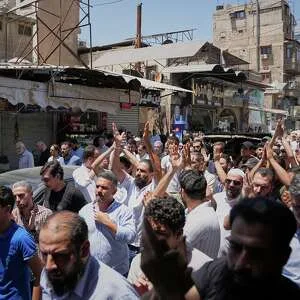
Iran Begins Week of Mourning After Khamenei Lies in State
Iran launched a week of funeral ceremonies for Supreme Leader Khamenei, marking a pivotal moment for the Islamic Republic's future.

Iran entered a period of formal national mourning as the body of Supreme Leader Ali Khamenei was placed on public display in Tehran, initiating a week of state funeral ceremonies that will draw officials, clerics, and citizens from across the country and beyond. The rituals signal not only a moment of grief but the opening of one of the most consequential political transitions the Islamic Republic has faced since its founding.
Khamenei, who had led Iran since 1989 following the death of revolutionary founder Ayatollah Ruhollah Khomeini, wielded near-absolute authority over the country's military, judiciary, and foreign policy apparatus. His passing closes an era defined by nuclear standoffs with the West, regional proxy conflicts, sweeping domestic repression, and sustained economic pressure from international sanctions. Few figures in modern Middle Eastern history have shaped their country's trajectory as durably — or as controversially.
Read more New Hampshire Gov. Ayotte Vetoes Nine Bills, Blocks Book Ban and Toll Hike →
The succession question now looms over Iranian politics with unusual urgency. The Assembly of Experts, a clerical body with constitutional authority to select a new Supreme Leader, will bear the weight of choosing a figure capable of consolidating power in a system already strained by popular discontent and external pressure. The outcome will reverberate far beyond Iran's borders, influencing the calculus of regional adversaries, nuclear negotiating partners, and global energy markets alike.
Analysts have long noted that any transition of supreme leadership in Iran carries inherent instability risk, not because the system lacks formal mechanisms, but because the authority of the position is as much personal and theological as it is institutional. Whoever inherits the role will face the immediate challenge of asserting legitimacy while managing a population that has grown increasingly restive over decades of economic hardship and political constraint.
Continue reading at Reuters