SpaceX Investors Navigate Wild Swings in Early Trading Days
SpaceX shares have swung sharply in their first two weeks as a public company, testing investor confidence in the Elon Musk venture.
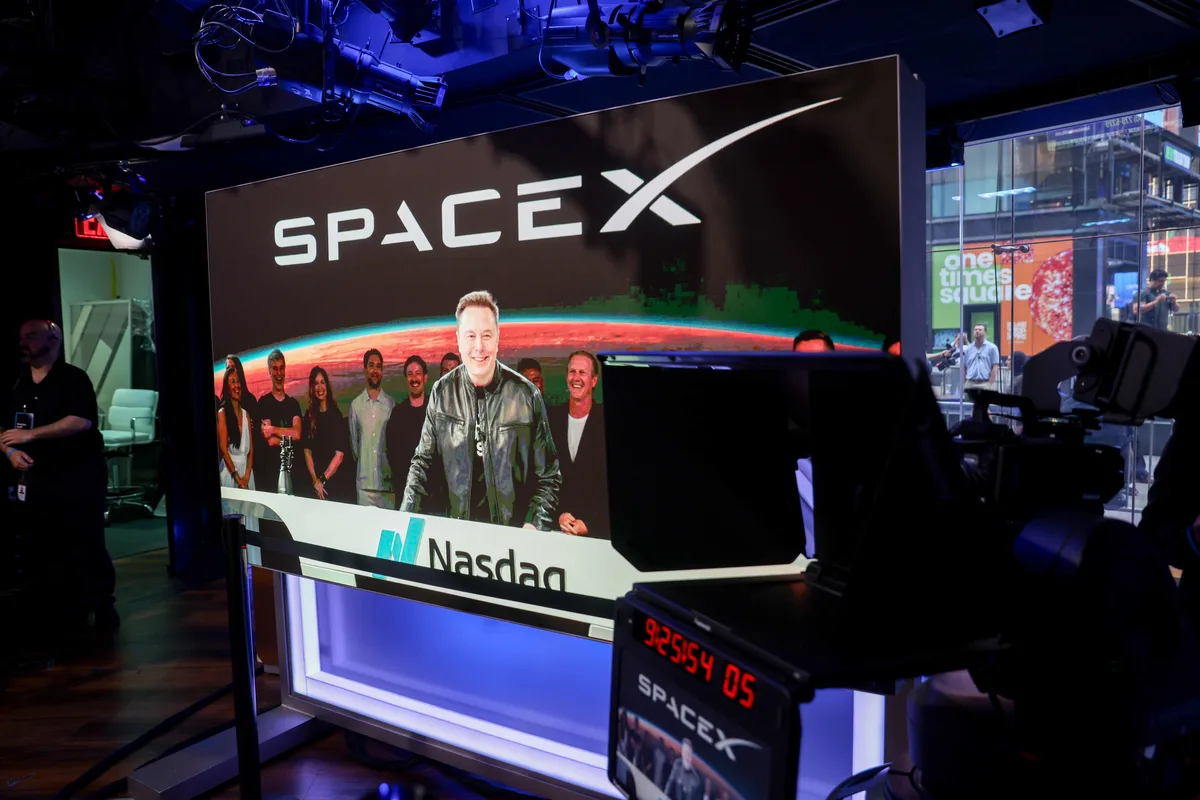
SpaceX's debut as a publicly traded company has been anything but quiet. In its opening two weeks on public markets, the aerospace and satellite giant has experienced dramatic price swings in both directions — the kind of volatility that separates conviction investors from those chasing momentum. The turbulence raises a pointed question: is the market pricing a company, or a personality?
The phenomenon some observers are calling the "cult of Elon" reflects a broader dynamic that has long defined Musk-adjacent assets. Tesla shares have historically lurched on tweets, offhand remarks, and executive drama that had little to do with vehicle sales or earnings. SpaceX now enters that same psychological territory, where the founder's public image functions as a second balance sheet — one that is far harder to model.
Read more OpenAI's IPO Path Remains Unclear Despite SEC Filing →
For institutional investors, the volatility creates both opportunity and risk. Big price swings in early trading are not unusual for high-profile listings, but the amplitude here matters. Investors betting on SpaceX's long-term fundamentals — its Starlink satellite internet division, its Starship launch program, and its dominant position in commercial rocket launches — must be prepared to stomach short-term drawdowns driven by sentiment rather than substance.
The analytical challenge is separating durable business value from the noise of celebrity-founder dynamics. SpaceX has genuine competitive moats: launch cost advantages, a growing Starlink subscriber base, and deep NASA and Defense Department contracts. Those fundamentals do not evaporate with a bad news cycle. But in early public trading, price discovery is messy, and retail-driven momentum can overwhelm the signal.
For investors trying to gauge where SpaceX goes from here, the opening weeks offer a cautionary lesson: in Musk-linked equities, volatility is not a bug — it may be a permanent feature of the asset class. Continue reading at US Top News and Analysis.