CoreWeave Shares Keep Sliding as Debt Burden Weighs on AI Cloud Firm
CoreWeave's stock is on an extended losing streak, with analysts pointing to its heavy reliance on debt financing as a key vulnerability amid elevated interest rates.
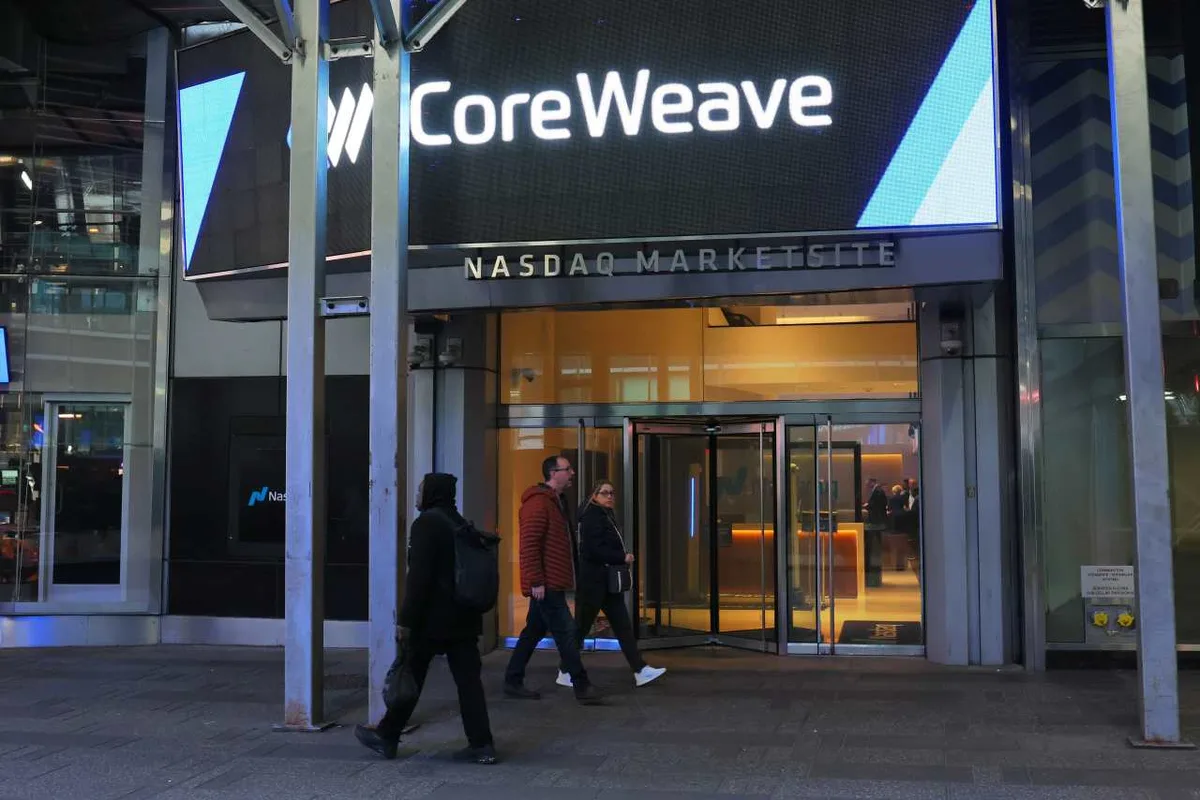
CoreWeave, the AI-native cloud infrastructure provider that went public earlier this year, is experiencing a prolonged stretch of stock declines that has drawn fresh scrutiny from Wall Street analysts. The selling pressure reflects not just broader market caution around high-growth technology names, but concerns specific to how CoreWeave has chosen to fund its rapid expansion.
At the center of the debate is the company's financing structure. At least one analyst has flagged CoreWeave's "unusually high exposure to debt financing" as a distinct risk factor in the current rate environment. Unlike many of its cloud-computing peers that have relied more heavily on equity or operating cash flow, CoreWeave's capital-intensive GPU infrastructure business has leaned on borrowing — a strategy that becomes increasingly costly when interest rates remain elevated for an extended period.
Read more Morgan Stanley Sets Revenue and Profit Records on Equities Surge →
The timing is significant. The Federal Reserve has kept benchmark rates at historically high levels as it works to contain inflation, and the prospect of rates staying higher for longer has broadly pressured companies carrying heavy debt loads. For CoreWeave, which competes for AI workloads against much larger, better-capitalized rivals like Amazon Web Services and Google Cloud, servicing debt obligations while simultaneously investing in growth creates a difficult balancing act that investors appear to be repricing in real time.
The underlying demand story for CoreWeave has not fundamentally changed — enterprise appetite for GPU computing tied to generative AI applications remains robust. But robust demand alone does not insulate a company from balance-sheet risk, and the market appears to be demanding a clearer path to profitability that justifies the leverage the company carries. How management addresses those financing concerns in upcoming communications with investors could be the key near-term catalyst for stabilizing the stock.
Continue reading at MarketWatch.com