Knicks Parade Brings Ticker Tape Back to a Paperless New York
NYC's Canyon of Heroes will see 2,500+ lbs of paper for the Knicks, despite a modern office world that barely uses any.
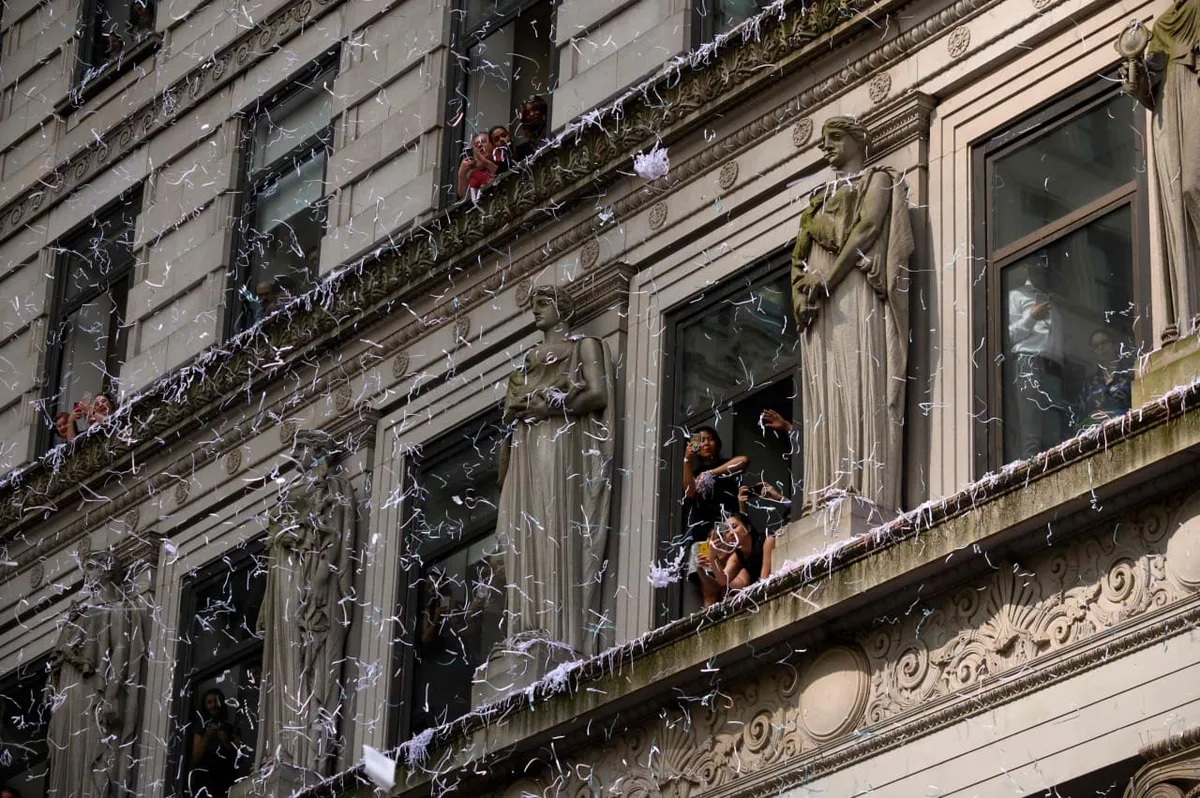
New York City's iconic ticker-tape parade tradition is staging a comeback for the New York Knicks, and it is doing so against considerable odds. Modern office buildings — the very towers lining the Canyon of Heroes in Lower Manhattan — have largely sealed or fixed windows that simply do not open, eliminating the spontaneous shower of paper that once defined these celebrations. The city has had to engineer workarounds just to keep the ritual alive.
The original ticker tape that gave these parades their name has been obsolete for decades, a casualty of digital financial markets that no longer produce reams of paper printouts from trading floors. What once was an accidental, organic celebration — traders tossing the narrow strips from telegraph machines — is now a logistical production requiring deliberate sourcing and distribution of paper confetti to participants and building occupants along the route.
Read more FIFA's Avalanche Blockchain Bet to Fight Ticket Scalping →
Despite those structural and cultural headwinds, organizers have committed to showering the Knicks with more than 2,500 pounds of paper, a figure that underscores both the scale of the celebration and the lengths the city will go to honor a championship run. It is a number that feels almost anachronistic in an era when office paper consumption has fallen sharply and remote work has further emptied the very buildings that once served as natural confetti dispensaries.
The persistence of the ticker-tape parade as a civic ritual speaks to something deeper than logistics — it is a form of collective memory that New York refuses to abandon, even when the physical infrastructure no longer supports it organically. The city essentially manufactures nostalgia at scale, coordinating what was once spontaneous into a carefully managed spectacle. For Knicks fans, the symbolism almost certainly outweighs the irony.
Continue reading at MarketWatch.com