Meta vs. Snap: Revenue Scale and Growth Trajectories Compared
Meta and Snap compete in social media but occupy vastly different financial tiers. Here's what the numbers reveal about each company's trajectory.
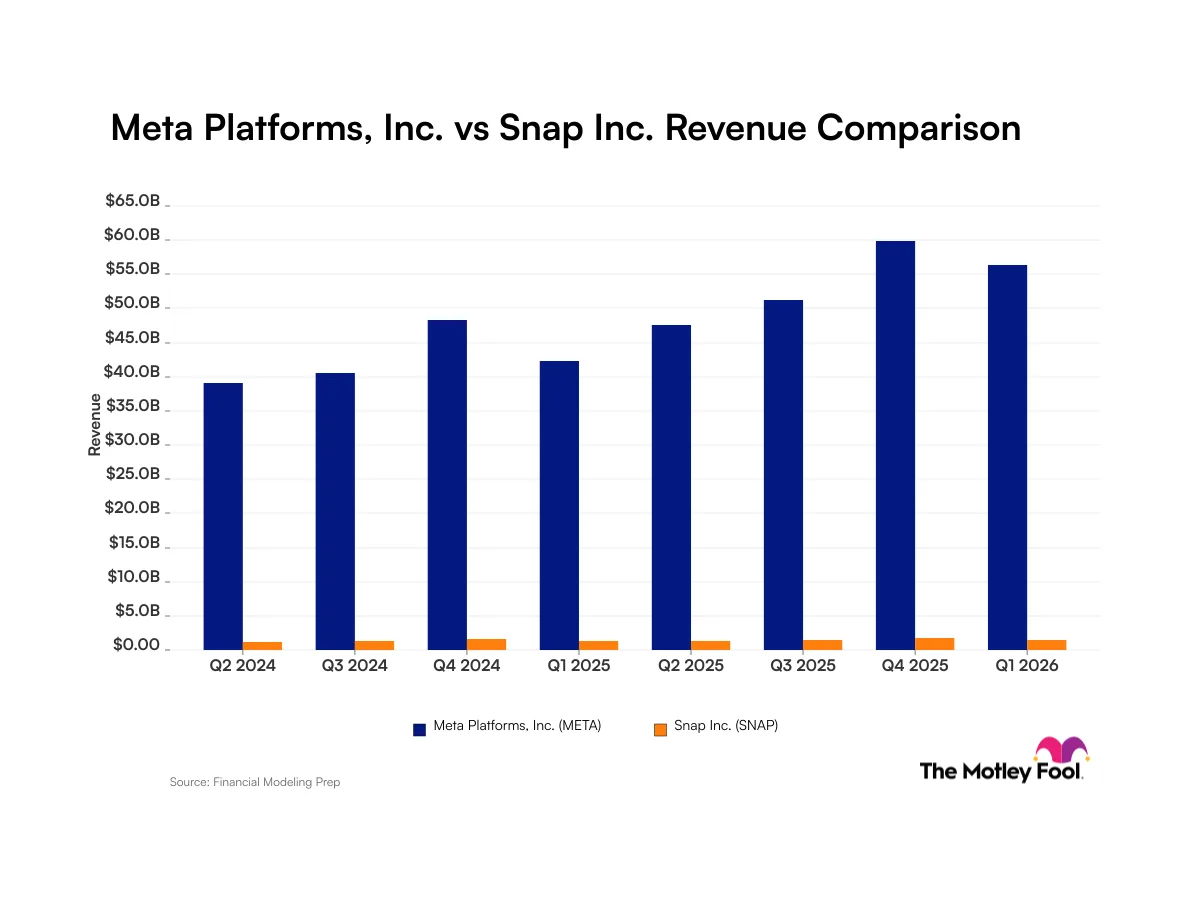
The social media advertising market is not a level playing field, and nowhere is that more apparent than in the financial gulf separating Meta Platforms from Snap. While both companies depend heavily on digital advertising revenue tied to user engagement, their scale, resilience, and growth trajectories tell fundamentally different stories about where power in the attention economy actually resides.
Meta, the parent company of Facebook, Instagram, and WhatsApp, has built one of the most formidable advertising machines in corporate history. Its revenue base dwarfs Snap's by orders of magnitude, giving it the financial flexibility to absorb market downturns, invest aggressively in artificial intelligence infrastructure, and pursue long-term moonshots like augmented and virtual reality. That kind of capital cushion creates compounding advantages that smaller rivals struggle to close.
Read more Wells Fargo Reaffirms Buy Rating on Affirm Holdings →
Snap, by contrast, operates in a structurally more precarious position. The company has demonstrated genuine cultural relevance — particularly among younger demographics — but converting that influence into durable, scaled revenue has proven elusive. Snap's advertising business is more sensitive to macroeconomic headwinds, and its path to consistent profitability remains a work in progress. Each earnings cycle invites fresh scrutiny of whether the platform can sustain momentum or whether it will remain perpetually subscale.
What makes the comparison analytically instructive is not simply the size difference, but what that difference signals about competitive moats. Meta's breadth of platforms and its troves of first-party user data give advertisers targeting precision that Snap cannot yet match at equivalent scale. As privacy regulations continue reshaping the digital ad landscape, companies with robust first-party data ecosystems hold a structural edge — an advantage that tilts further in Meta's favor over time.
For investors, the Meta-versus-Snap framing is ultimately a question of risk tolerance and time horizon. Meta offers the relative stability of an entrenched giant with dominant market share. Snap offers higher-variance upside if it can unlock monetization at scale, but with commensurately higher execution risk. The revenue trajectories of both companies will remain a closely watched barometer of health across the broader social media sector. Continue reading at Yahoo Finance.