Nvidia and Planet Labs: A Revenue Tale of Two Tech Eras
Nvidia dominates AI chip revenue while Planet Labs charts a quieter rise in space-based data. A comparison reveals how two tech eras are unfolding simultaneously.
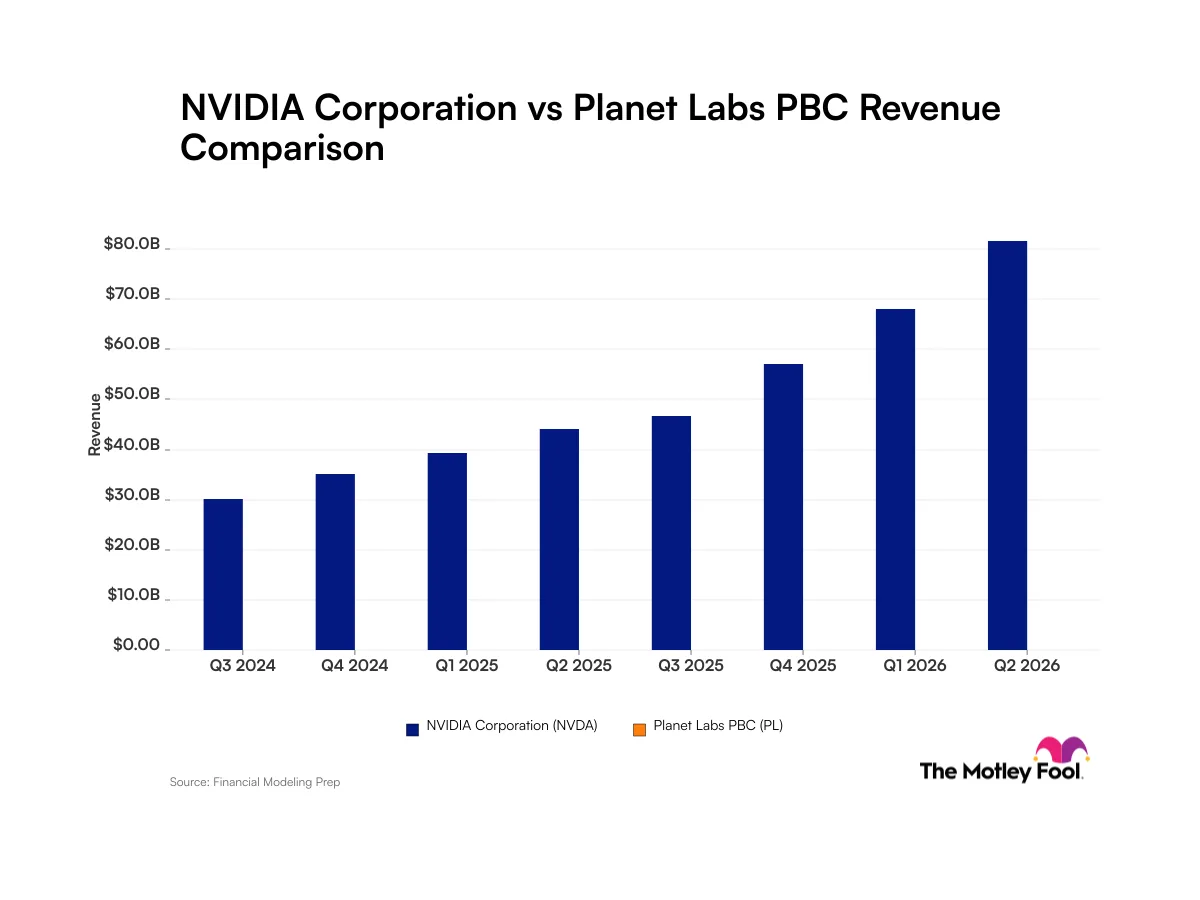
The artificial intelligence boom has produced few beneficiaries as visible as Nvidia, whose chip revenues have become something of a proxy for the entire sector's momentum. At the same time, a quieter but structurally significant story is developing in low-Earth orbit, where companies like Planet Labs are building businesses around satellite-derived data. Placing these two trajectories side by side offers a useful lens for understanding how capital and ambition are flowing through technology right now.
Nvidia's revenue growth has been extraordinary by almost any historical standard, driven by insatiable demand for its graphics processing units from cloud hyperscalers, enterprise AI teams, and research institutions. The scale and speed of that expansion have made Nvidia a kind of bellwether — when its numbers move, analysts read signals about the entire AI infrastructure buildout. That level of market centrality is rare and reflects how indispensable the company's hardware has become to the current wave of machine-learning development.
Read more Valmont Industries CFO Purchases $100K in Stock: What It Signals →
Planet Labs occupies a very different position in the technology landscape. The company's business model is built around operating a constellation of Earth-observation satellites and monetizing the imagery and analytics those satellites generate. Revenue growth in this segment tends to be steadier and more incremental than the explosive curves associated with AI hardware, but the long-term thesis is compelling: as governments, agricultural firms, defense contractors, and climate researchers increasingly rely on near-real-time geospatial intelligence, the addressable market expands in durable ways.
What makes the comparison analytically interesting is less about which company is "winning" and more about what each trajectory says about where durable value is being created in tech. Nvidia's dominance is real but also concentrated in a single hardware cycle; if the AI buildout plateaus or chip architectures shift, that revenue profile could change materially. Planet Labs, by contrast, is attempting to build recurring subscription-style revenue tied to data that has no obvious substitute — satellite imagery from orbit. The risk profile is different, and so is the patience required from investors.
For analysts and retail investors alike, comparing these two companies is an exercise in understanding technology risk on a spectrum. One represents the white-hot center of the current investment supercycle; the other represents a long-duration bet on infrastructure that most people never see. Both stories matter for anyone trying to map where the next decade of tech value actually accrues. Continue reading at Yahoo Finance.