OpenAI and Broadcom Unveil First Custom AI Chip, Jalapeño
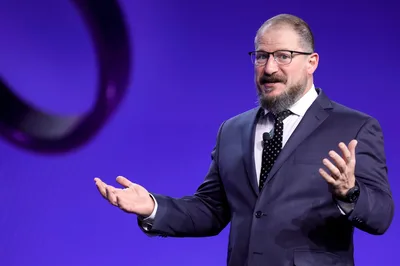
OpenAI and Broadcom have revealed Jalapeño, their first jointly developed custom chip, eight months after announcing their partnership.

OpenAI has taken a significant step toward controlling its own hardware destiny, unveiling a custom AI chip called Jalapeño developed in partnership with semiconductor giant Broadcom. The reveal comes roughly eight months after the two companies first announced their collaboration, marking a concrete milestone in OpenAI's broader ambition to reduce its reliance on third-party silicon.
The move signals OpenAI's intent to "build the full stack" — a phrase that captures the company's growing desire to own not just the software and models that have made it a household name, but also the underlying infrastructure that powers them. Vertical integration at this level is a strategic play that mirrors moves by other major AI players, including Google, which has long developed its own Tensor Processing Units, and Amazon, which has invested heavily in its Trainium and Inferentia chip lines.
Read more Qualcomm Acquires AI Startup Modular to Strengthen Data Center Push →
For Broadcom, the partnership represents an opportunity to deepen its foothold in the custom AI silicon market, a segment that has grown explosively as hyperscalers and AI labs seek alternatives to Nvidia's dominant GPU ecosystem. Broadcom has positioned itself as a go-to partner for companies designing application-specific integrated circuits, and landing OpenAI as a customer adds considerable prestige to that portfolio.
The deeper significance of Jalapeño lies in what it represents strategically rather than just technically. By investing in proprietary chip design, OpenAI gains potential leverage over costs, performance optimization, and supply chain security — all critical concerns for a company running some of the world's most computationally intensive workloads. Whether Jalapeño delivers on those promises will depend on execution details not yet fully disclosed.
Continue reading at US Top News and Analysis