S&P 500 Drops Over 1% on Warsh's First Day as Fed Chair
Markets sold off sharply as Kevin Warsh held his inaugural Fed press conference, marking the worst 'Fed day' debut for a new chair since 1994.
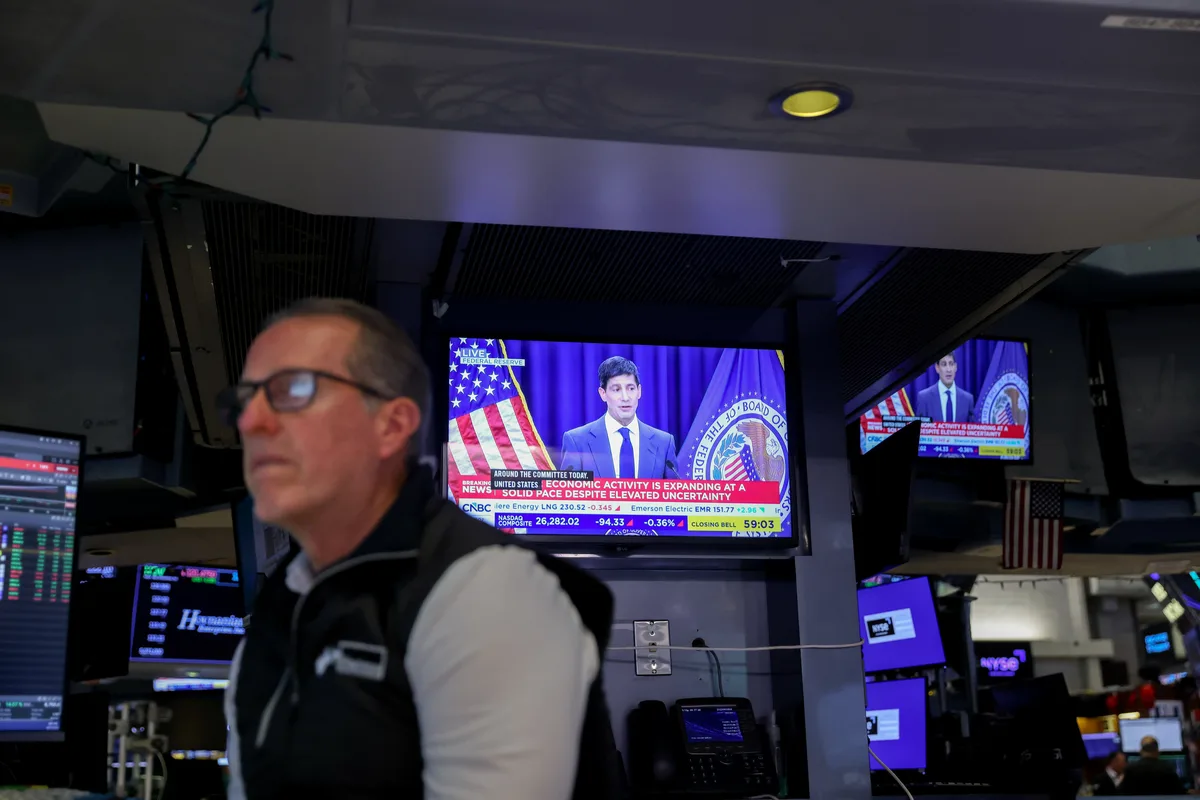
Kevin Warsh's first day leading the Federal Reserve as chair got off to a turbulent start in financial markets, with the S&P 500 shedding more than 1% on Wednesday — the worst market performance on a new Fed chair's debut day in roughly three decades. The selloff deepened noticeably as Warsh stepped to the podium for his inaugural press conference, suggesting investors were closely parsing his tone and forward guidance for signals about the central bank's policy trajectory.
The 1994 benchmark is a historically significant one. That year marked a period of aggressive Fed rate hikes that caught bond and equity markets badly off guard, ultimately contributing to one of the worst years for fixed-income investors in modern history. The fact that Warsh's debut now ranks alongside that era underscores just how heightened market sensitivity to Fed communication has become — and how much rides on a new chair's ability to project credibility and clarity from the very first appearance.
Read more Bitcoin Cash Leads CoinDesk 20 Index Decline With 3.1% Drop →
A press conference-driven selloff of this magnitude reflects more than routine volatility. Markets tend to treat a new Fed chair's maiden address as a high-stakes audition, scrutinizing word choice, cadence, and any deviation from established messaging frameworks. Whether Wednesday's reaction reflects genuine policy concern or simply the friction of transition remains to be seen, but the historical comparison will likely follow Warsh into his next several appearances before investors recalibrate their read on his leadership.
The episode serves as a reminder that central bank communication is itself a policy instrument — and that any perceived ambiguity from a new steward of that instrument can ripple quickly through equity prices. How Warsh manages market expectations in the weeks ahead may prove just as consequential as the Fed's actual rate decisions.
Continue reading at US Top News and Analysis.