Why AMD Is Positioned to Outpace Intel and Nvidia in Data-Center CPUs
A Raymond James analyst argues AMD holds a structural edge in data-center CPUs, with strong share-gain potential and improving profit conversion.
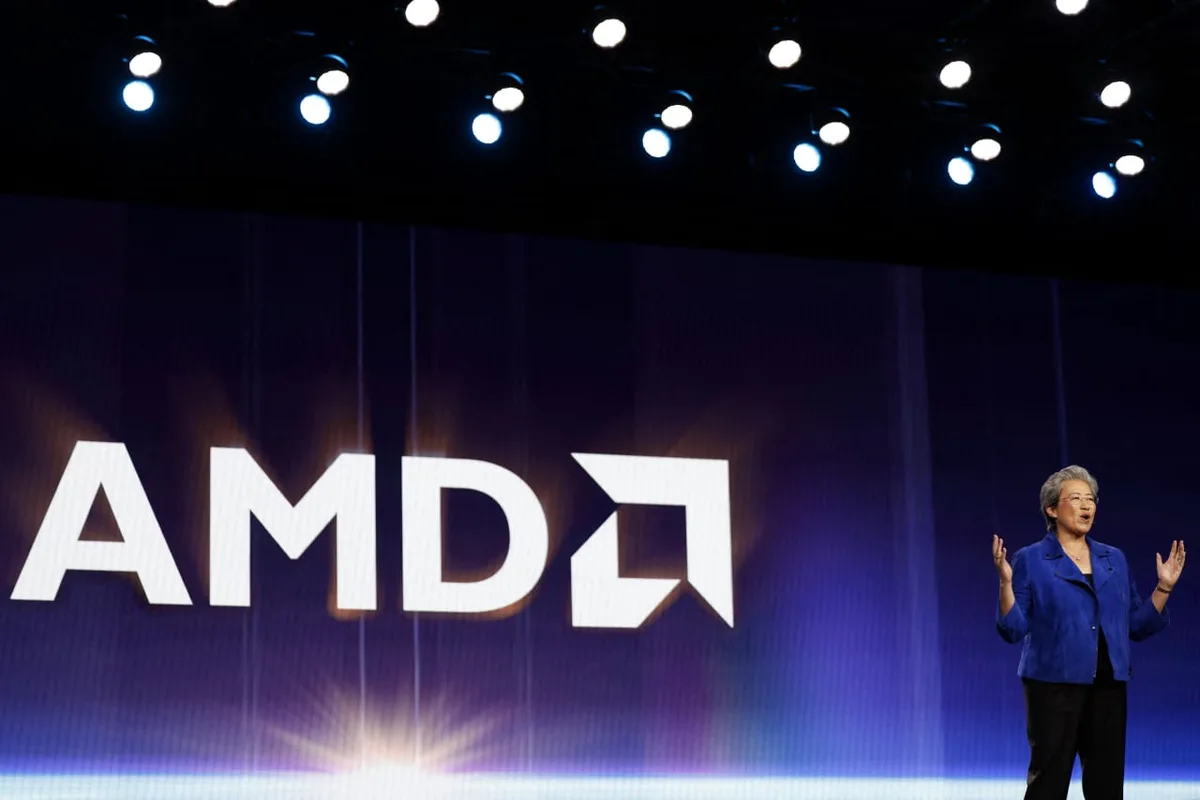
Advanced Micro Devices is drawing renewed attention from Wall Street as analysts assess which chipmaker stands to benefit most from the relentless expansion of data-center infrastructure. According to a Raymond James analyst, AMD is particularly well-positioned to capture meaningful share in the market for data-center central processing units — a segment that sits at the core of enterprise computing, cloud workloads, and increasingly, AI-adjacent tasks that don't require dedicated accelerators.
The bullish thesis rests on two pillars: competitive positioning and financial leverage. On the competitive front, AMD has spent years closing the performance-per-watt gap with Intel's server CPU lineup, and its EPYC processor family has earned adoption from hyperscalers and enterprise buyers alike. That credibility, built incrementally over multiple product generations, is now translating into a durable share-gain narrative that analysts see as far from exhausted.
Read more Bitcoin Eyes Third Consecutive Winning Week Amid Market Turmoil →
The profit dimension is arguably the more compelling part of the story. Raymond James suggests AMD has room to convert revenue growth into earnings at an improving rate — a dynamic that matters enormously to investors who have watched the company scale its top line but have wanted clearer evidence of operating leverage. If data-center CPU demand continues to rise alongside cloud capital expenditure cycles, AMD's margin profile could strengthen in ways that the current valuation may not fully reflect.
It is worth noting where Nvidia fits into this framing. While Nvidia dominates the GPU-based accelerator market that powers large language models and generative AI training, the CPU market operates on different dynamics — longer procurement cycles, deeper integration with software stacks, and price sensitivity that rewards architectural efficiency over raw throughput. AMD's ability to compete on those terms, rather than trying to match Nvidia on GPUs, may actually be a strategic strength rather than a concession.
For investors parsing the semiconductor landscape, the AMD data-center CPU story is a reminder that the AI infrastructure boom has multiple layers, and not every layer is winner-take-all. Continue reading at MarketWatch.com